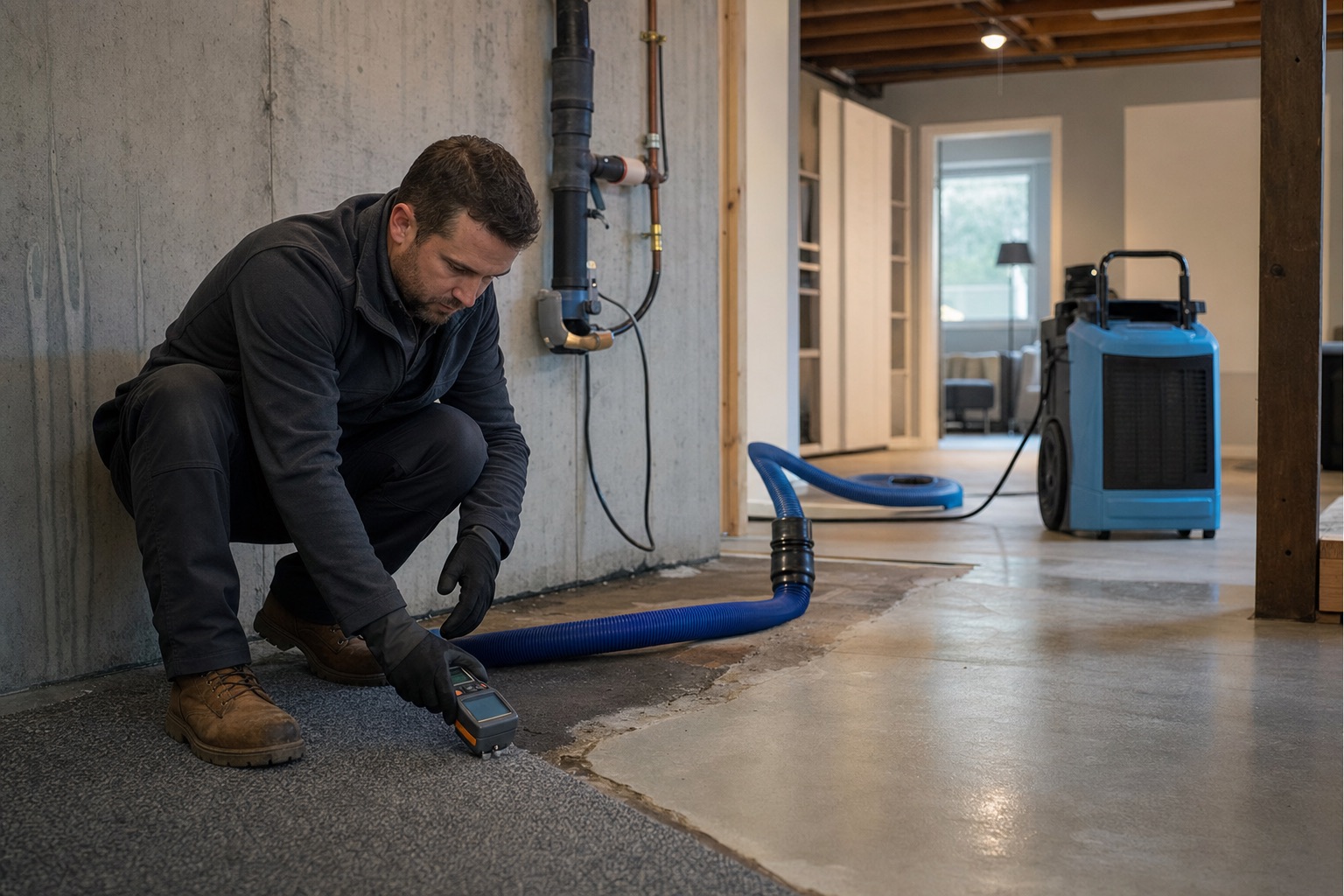
Water removal is one part of the larger response
The right scope depends on the source, how long water was present, the affected material layers, and what moisture checks show.
Clarify the source
The timing and source help frame which areas and materials deserve attention.
Define the affected area
The visible boundary is a starting point, not always the full moisture boundary.
Choose the practical method
Removal methods should fit the water volume, access, and material conditions.
Check progress
Follow-up moisture information supports better decisions about drying and materials.
What a useful Tacoma service conversation should cover
Tacoma combines older homes, finished basements, changing elevations, coastal weather, and a wide range of building materials. Those details matter when tracing water movement and planning drying.
Ask how the source, material layers, connected rooms, and any area below the visible damage affect the plan. A clear explanation should separate immediate water removal from moisture checks, controlled drying, cleanup, and any repair work that may follow.
Questions worth asking before work moves forward
- Which materials and rooms are included in the affected area?
- How will remaining moisture and drying progress be evaluated?
- What can potentially dry in place, and what conditions could change that decision?
- What information will support the handoff to cleanup or repairs?